Human beings have always searched for better ways to see the world. In ancient times, people discovered that certain transparent objects could enlarge text and nearby items. Therefore, early civilizations began experimenting with polished crystals, glass, and water-filled spheres. Although these tools looked very different from modern eyeglasses, they marked the beginning of visual assistance.
The ancient Romans explored the science of optics with great curiosity. Scholars observed how light moved across curved surfaces and how it affected vision. For instance, some readers used magnifying glasses to enlarge the writing. Meanwhile, artisans refined their techniques and created clearer materials for daily use.
During the Middle Ages, reading became increasingly important across Europe. Monks spent long hours copying religious manuscripts by hand. As they aged, many struggled to read small lettering. Consequently, the demand for vision aids grew steadily. Inventors and glassmakers responded by seeking practical solutions to improve eyesight during close work.
The Invention of Wearable Eyeglasses
The first wearable eyeglasses appeared in Italy during the late thirteenth century. Skilled artisans in cities such as Venice and Pisa produced lenses with improved clarity and shape. They connected two convex lenses with simple frames that rested on the nose. Although these early glasses lacked side arms, they provided tremendous help for readers and scholars.
At first, eyeglasses remained rare and expensive. Wealthy individuals, religious leaders, and educated professionals used them most often because they could afford handcrafted lenses. However, word about this invention spread quickly throughout Europe. As trade routes expanded, more artisans learned how to produce eyewear.
The Renaissance further increased the popularity of glasses. Artists, scientists, and writers valued education and intellectual achievement during this period. Therefore, eyeglasses became associated with wisdom and knowledge. Portrait paintings often showed scholars wearing spectacles to emphasize intelligence and learning.
At the same time, advancements in scientific research improved lens quality. Experts studied the human eye more carefully and developed better methods for correcting vision problems. As a result, eyeglasses became more effective and widely respected.
Scientific Discoveries Improved Eyewear
The seventeenth and eighteenth centuries introduced major changes in optical science. Researchers developed a stronger understanding of light, focus, and human vision. Consequently, eyewear makers created lenses that offered greater precision and comfort.
One of the most important innovations came from Benjamin Franklin. He invented bifocal glasses to solve the challenge of switching between reading and distance lenses. By combining two prescriptions into one frame, he created a practical solution that many people still use today.
Manufacturers also improved frame construction during this period. Early designs often slipped from the face and felt uncomfortable. Therefore, inventors added sidepieces that hooked over the ears. This change helped glasses stay secure and made daily wear much easier.
In addition, the Industrial Revolution transformed production methods. Factories produced eyewear faster and more efficiently than small workshops. As prices dropped, ordinary families gained access to eyeglasses for the first time. Consequently, eyewear became part of everyday life rather than a luxury for the wealthy.
Eyeglasses Become Fashionable
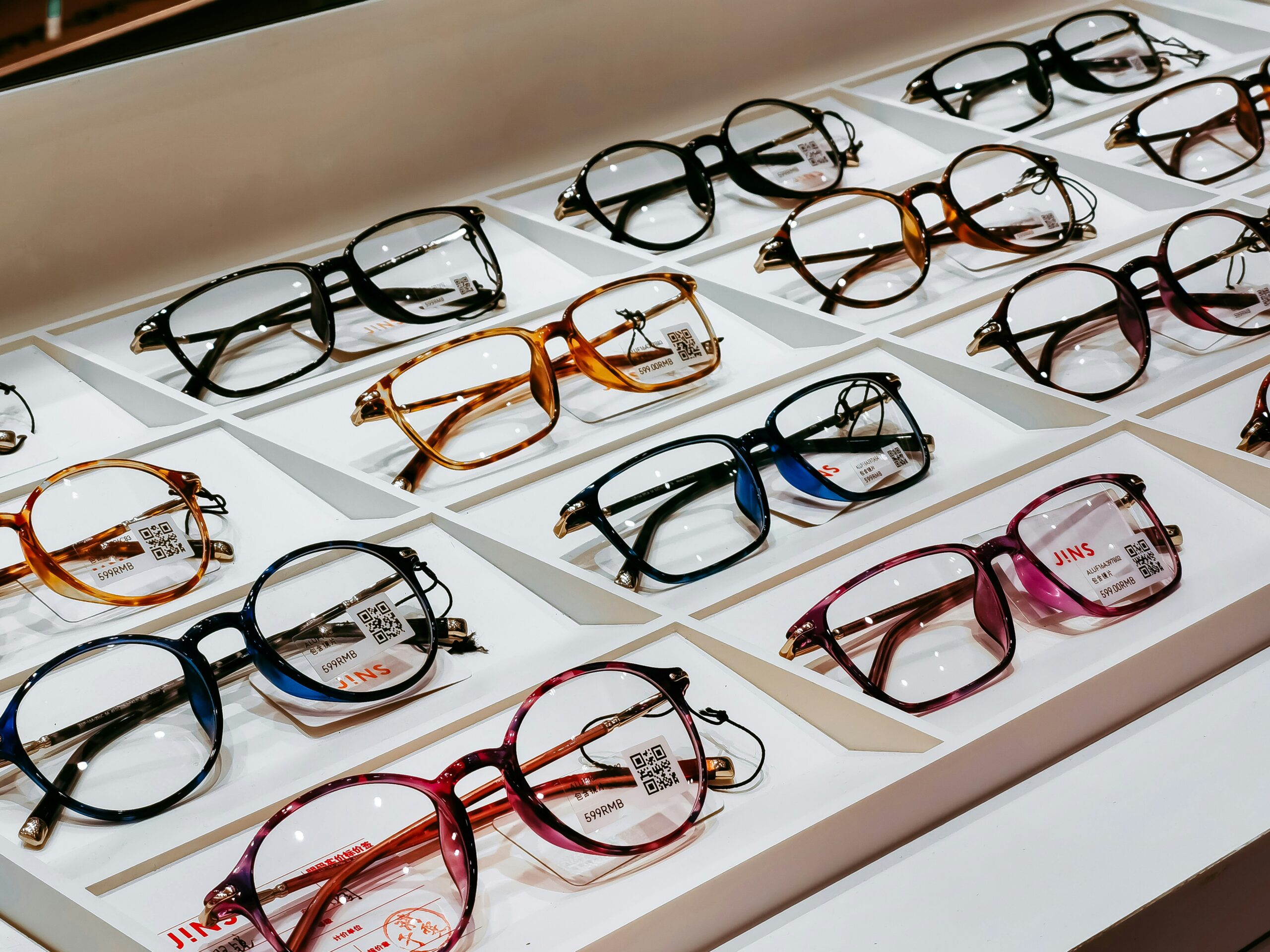
By the nineteenth century, eyeglasses served both practical and fashionable purposes. People no longer viewed them only as medical tools. Instead, they began choosing styles that reflected personal taste and social status.
Frame designs became more decorative and elegant. Manufacturers experimented with gold, silver, and tortoiseshell materials to attract stylish customers. Women often chose delicate frames with refined details, while men preferred strong, structured designs. Therefore, eyewear began to shape personal identity in new ways.
Sunglasses also gained attention during this period. Early tinted lenses protected the eyes from bright sunlight and glare. However, the entertainment industry later transformed sunglasses into cultural icons. Famous actors and public figures wore stylish frames in films and public appearances. As a result, eyewear developed a strong connection with glamour and celebrity culture.
Advertising further accelerated this trend. Companies promoted glasses as attractive accessories rather than signs of weakness or aging. Consequently, more people embraced eyewear with pride and confidence.
Modern Technology Changes the Industry
The twentieth century brought dramatic technological progress to the eyewear world. Manufacturers introduced lightweight plastics that replaced many heavy metal materials. Therefore, glasses became more comfortable for long-term wear.
Lens technology improved rapidly as well. Companies developed scratch-resistant coatings, anti-reflective surfaces, and ultraviolet protection. These innovations enhanced durability while also protecting eye health. In addition, prescription accuracy reached new heights due to advanced measurement techniques.
Contact lenses entered the market in the twentieth century, providing an alternative to traditional glasses. However, eyeglasses remained popular because they offered convenience, affordability, and style. Many individuals viewed glasses as fashionable accessories rather than simple vision aids.
As computers and smartphones became essential parts of daily life, new challenges appeared. People spent long hours staring at digital screens, which often caused eye strain and discomfort. Consequently, eyewear companies created blue-light-filtering lenses to support modern lifestyles.
Online shopping has also changed how people purchase eyewear. Customers can now explore countless frame styles without leaving home. Virtual try-on technology lets users preview glasses digitally before making a decision. Therefore, shopping for eyewear has become faster and more personalized.
Eyewear as a Reflection of Personality
Today, eyeglasses hold strong cultural and social significance. People often choose frames that match their personality, profession, or fashion preferences. Some individuals favor bold, colorful designs, while others prefer simple, minimalist styles.
Fashion brands regularly include eyewear in seasonal collections. In addition, influencers and celebrities help popularize new trends through social media and entertainment platforms. Vintage-inspired frames, oversized glasses, and transparent designs continue to make a comeback as styles constantly evolve.
Public attitudes toward eyeglasses have changed dramatically over time. In earlier centuries, some people felt embarrassed about wearing spectacles. Modern culture, however, often links glasses with creativity, intelligence, and sophistication. Consequently, many individuals wear nonprescription frames purely for appearance.
Eyewear companies also focus more on inclusivity and comfort today. Designers create frames for different face shapes, lifestyles, and accessibility needs. Therefore, consumers enjoy more options than ever before.
Looking Ahead to the Future of Eyeglasses
The future of eyewear promises even greater innovation. Technology companies continue developing smart glasses with advanced digital features. Some models already include voice assistants, cameras, navigation systems, and augmented reality displays. As these technologies improve, eyeglasses may become powerful communication devices as well as vision aids.
Sustainability also shapes the industry’s future. Many manufacturers now use recycled materials and environmentally friendly packaging. Consumers increasingly support brands that prioritize ethical production and environmental responsibility. Therefore, eco-conscious design continues gaining importance.
Despite these modern changes, traditional craftsmanship remains valuable. Skilled artisans continue producing handmade frames with artistic detail and individuality. This combination of innovation and craftsmanship keeps eyewear both practical and expressive.
From ancient magnifying tools to advanced smart glasses, eyeglasses have experienced an extraordinary evolution. They have improved education, supported daily life, and influenced fashion across generations. Although technology and styles continue changing, eyewear still serves the same essential purpose. It helps people see clearly while allowing them to express who they are.