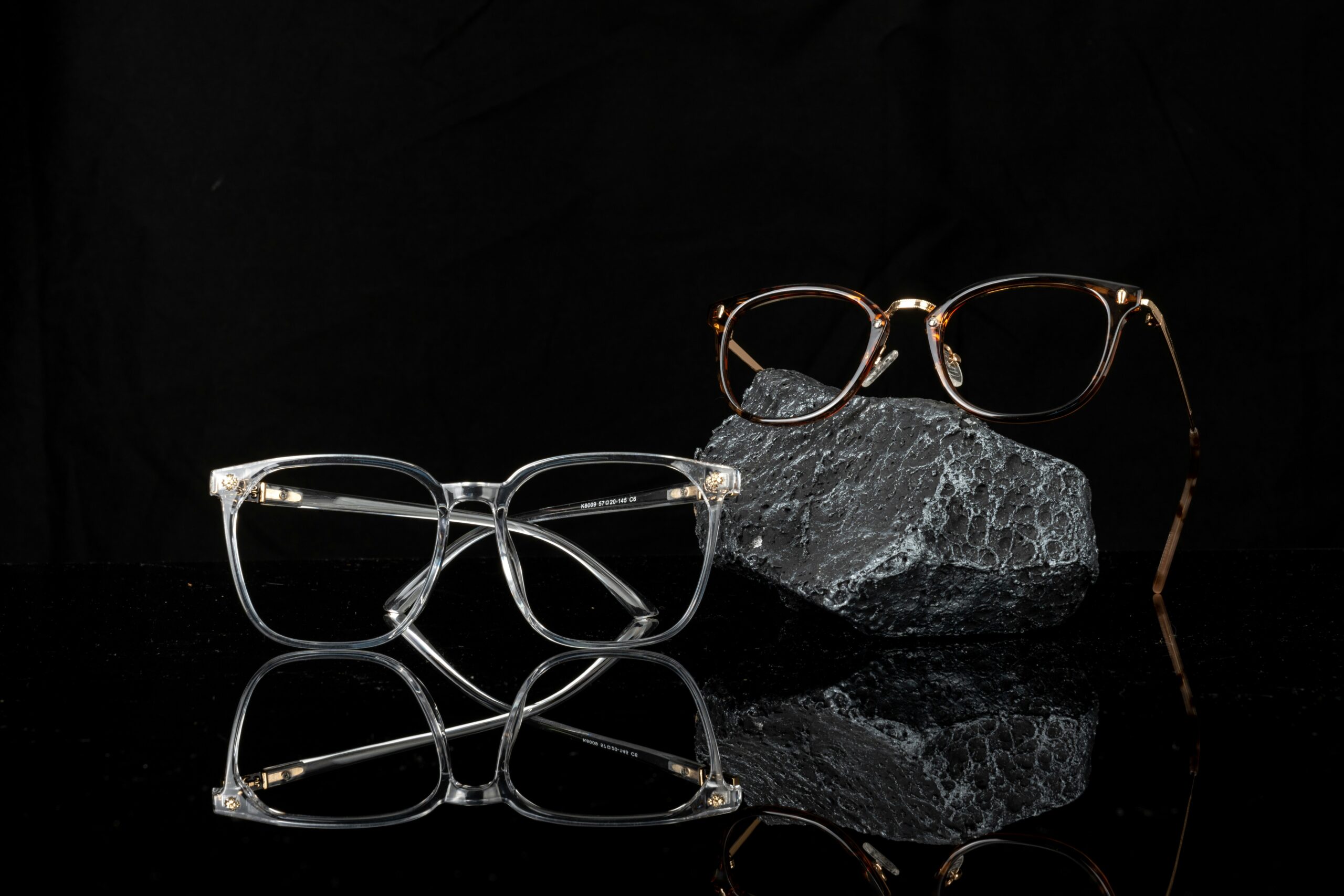
Eyeglasses have changed the way people see the world. Today, they are common in homes, schools, and offices. Yet the story of eyeglasses began many centuries ago. The evolution of eyeglasses shows how simple tools became both medical devices and fashion items. Over time, these lenses moved from rare objects to everyday essentials. This journey reflects human creativity and the need to solve problems in clear and practical ways.
The Early Vision Aids in Ancient Times
Long before modern eyeglasses, people searched for ways to improve vision. In ancient Rome, writers noted that glass spheres filled with water could make text appear larger. These objects were not true eyeglasses, but they helped people read. In other regions, polished crystals were used to magnify small letters. These early tools marked the first steps in the evolution of eyeglasses.
People did not fully understand the science of light at that time. They learned by trial and error. When they saw that curved glass could enlarge objects, they used it to help with reading. These tools were heavy and not easy to carry. Still, they proved that vision problems could be improved with simple materials.
The Birth of the Wearable Eyeglasses
The first wearable eyeglasses appeared in Italy in the late 1200s. Craftsmen created two small lenses and connected them with a simple frame. Users balanced them on the nose. These early eyeglasses did not have arms that hooked over the ears. People often held them in place by hand.
The invention spread across Europe. Monks and scholars found them very useful for reading. At that time, books were rare and valuable. Clear vision was important for copying texts by hand. The evolution of eyeglasses moved forward as more people saw their value.
These early models only helped with farsightedness. Nearsighted people had to wait longer for proper lenses. Even so, demand for eyeglasses grew. Craftsmen improved lens shapes and began to understand how curves changed vision.
The Improvements During the Renaissance
During the Renaissance, science and art advanced quickly. Thinkers studied light and optics in greater detail. This knowledge improved lens quality. Eyeglasses became more accurate and comfortable.
Frames also changed. Some designs added side pieces that rested on the temples. Others used ribbons tied around the head. These changes made eyeglasses easier to wear for longer periods. The evolution of eyeglasses during this time focused on function and comfort.
As trade expanded, eyeglasses reached more countries. Skilled workers made lenses with better clarity. Glass quality improved as well. People from different social classes began to use them. What once seemed rare slowly became more common.
The Rise of the Modern Lens Science
The 1700s and 1800s brought major breakthroughs. Scientists learned more about how the eye works. They studied common vision problems such as nearsightedness and astigmatism. With better research, lens makers designed more precise eyeglasses.
Benjamin Franklin played a role in this stage of the evolution of eyeglasses. He invented bifocals, which combined two lens types in one frame. This design helped people who needed help seeing both near and far objects. Bifocals saved users from switching between two pairs of glasses.
Factories began to produce eyeglasses on a larger scale. This shift lowered costs and made them more affordable. People from many backgrounds could now buy them. Eyeglasses were no longer limited to scholars or the wealthy.
The Industrial Growth and Mass Production
The Industrial Revolution changed how goods were made. Machines replaced much of the handwork. Eyeglasses could now be produced faster and in larger numbers. Standard sizes became common. This shift helped meet growing demand.
Optometry also became a formal field. Eye doctors tested vision and prescribed correct lenses. This process improved accuracy and comfort. The evolution of eyeglasses now included medical care and professional guidance.
Frames became lighter and stronger. Materials such as steel and later plastic made glasses easier to wear. Adjustable nose pads and better hinges added comfort. These updates made eyeglasses part of daily life for millions.
The Entry of Eyeglasses into the World of Fashion
In the 1900s, eyeglasses began to change in a new way. They were no longer just medical tools. Designers started to see them as style items. Different shapes, colors, and sizes became available.
Hollywood played a role in this shift. Famous actors wore eyeglasses on and off screen. This exposure helped remove old social stigma. Instead of hiding glasses, people began to show them proudly. The evolution of eyeglasses now included personal expression.
Large frames, round lenses, and bold colors came in and out of trend. Each decade brought a new look. Eyeglasses became part of identity. People chose frames that matched their face shape and personality.
The Technological Advances in the Modern Era
Today, eyeglasses are more advanced than ever. Lightweight plastics and high index lenses make frames thin and comfortable. Anti glare coatings reduce reflection. Blue light filters protect eyes from screens.
Digital tools help eye doctors measure vision with high accuracy. Custom lenses can match each person’s exact needs. The evolution of eyeglasses continues as research improves both design and function.
Some modern eyeglasses even include smart features. Certain models connect to phones or track health data. These designs blend vision care with technology. While these features are still developing, they show how far eyeglasses have come.
The Symbol of Function and Style
The story of eyeglasses is a story of problem solving. What began as simple magnifying tools became advanced devices that improve daily life. The evolution of eyeglasses reflects growth in science, industry, and culture.
Today, millions of people rely on eyeglasses to work, study, and drive. At the same time, many choose frames that reflect their taste. Eyeglasses now sit at the meeting point of health and fashion.
From ancient glass spheres to smart frames, the journey has been long and creative. Each stage brought new ideas and better solutions. The evolution of eyeglasses continues, shaped by both need and imagination.